
Water Heater Leaking From Bottom: Is It Dangerous?
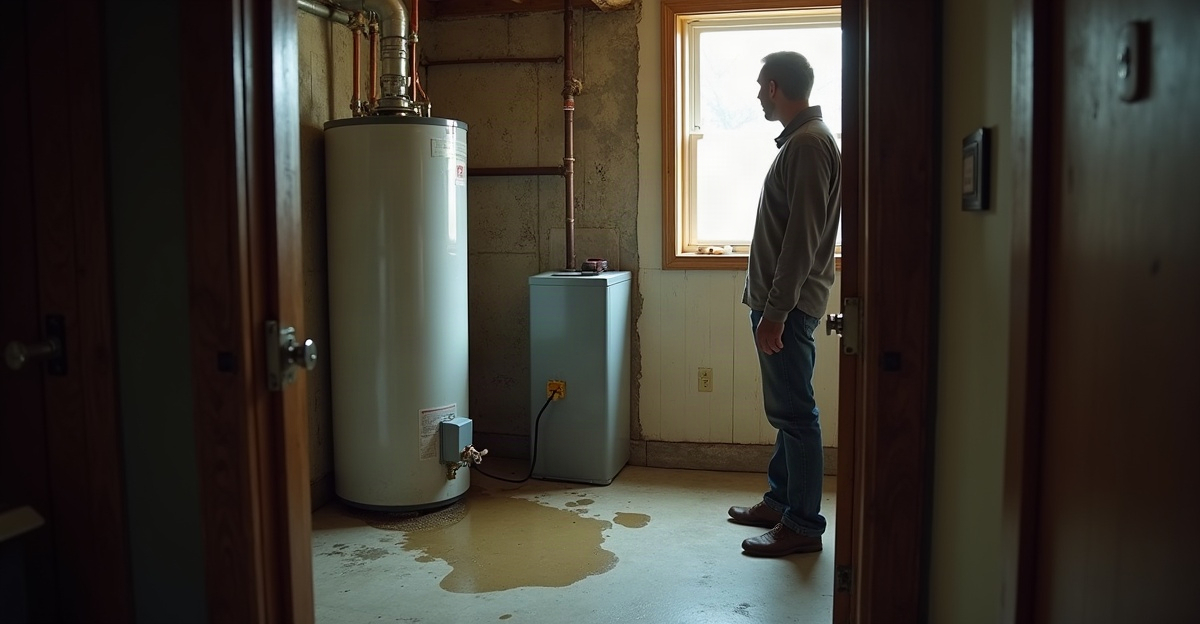
A water heater leaking from the bottom can create danger if it causes rapid flooding, reaches electrical equipment, or appears with gas odors, steam, hissing, or extreme heat. Small leaks can come from a valve, relief pipe, condensation, or a nearby connection. However, water from the tank body or seams often indicates corrosion and calls for replacement.
Key Takeaways
- Call emergency service immediately if water flows rapidly or continuously, flooding occurs, or we notice a gas odor, steam, electrical exposure, burning smells, or hissing sounds.
- Shut off the cold-water supply if we can reach it safely. Turn off electrical power only from a dry area. Turn off a gas unit only if we don’t smell gas.
- Don’t drain the tank, remove panels, cap the temperature-and-pressure relief pipe, or try to seal a corroded tank.
- Water beneath the heater doesn’t always mean the tank has failed. We recommend having a technician inspect valves, connections, relief discharge, condensation, and water entering from above.
- A leak through the tank body, seams, or base usually indicates internal corrosion. This issue generally requires water heater replacement.
Is a Bottom Leak Dangerous? Know When to Call for Emergency Help
A water heater leaking from bottom can range from a small external drip to an urgent flooding or safety problem. The risk depends on where the water starts, how quickly it is flowing, and whether gas, electricity, heat, or pressure hazards are involved.
For rapid leaking, gas odor, steam, electrical risk, or flooding, call for emergency service now. Our emergency HVAC service team can help address immediate risks and determine the safest next step.
We treat the situation as urgent when water flows rapidly or continuously, spreads into finished areas, or reaches outlets, appliances, wiring, or an electrical panel. Gas smells, hissing sounds, steam, burning odors, a tripped breaker, visibly damaged wiring, unusually hot water, rusty water, rumbling noises, or unstable hot water also need prompt attention.
A hot water heater leaking from bottom does not always mean an emergency. Still, a persistent drip can damage floors, walls, stored belongings, and nearby equipment. Delaying service may also turn a repairable issue into a more expensive replacement.
Water appearing from the tank body, seams, or directly beneath the tank deserves special attention. That pattern can point to internal corrosion and tank failure. Keep clear of the area if there is active flooding, electrical exposure, or any concern about gas.
What to Do If Your Water Heater Is Leaking From the Bottom
Knowing what to do if water heater is leaking from bottom starts with protecting people and property. Keep people, pets, and stored belongings away from pooled water. Move valuables only if the floor is stable and the area is free from electrical hazards.
Avoid standing in water near outlets, appliances, panels, or exposed wiring. If water is actively flowing and the cold-water supply valve is easy to reach safely, shut off that valve to stop more water from entering the heater.
For an electric unit, turn off power at the circuit breaker only if the area is dry and safe to access. For a gas unit, turn the control to its manufacturer-labeled off setting only if there is no gas odor. We never recommend touching gas lines, burner parts, or internal controls beyond that labeled setting.
Do not drain the tank, remove access panels, relight a pilot, repair a gas line, cap a relief valve discharge pipe, bypass a safety device, or try to seal a corroded tank. These actions can create serious burn, pressure, electrical, and gas hazards.
If conditions are safe, dry the floor around the unit and watch for fresh water. Water collecting at the base does not always mean the tank has failed. A qualified technician can trace the source without unsafe dismantling and explain whether repair is possible. For prompt help, contact our water heater service team.
Common Reasons Water Collects Under a Water Heater
A water heater leaking from the bottom may have several causes. The visible puddle alone does not confirm that the tank is leaking.
A loose or failing drain valve can drip near the bottom of the unit. This valve may be repairable, but we need to confirm it is the actual source before recommending a fix.
Water may also come from the temperature-and-pressure, or T&P, relief valve discharge pipe. This safety device releases water when temperature or pressure becomes too high. Discharge may indicate excessive pressure, overheating, a failed relief valve, or a plumbing issue that needs professional diagnosis. Never plug, cap, or ignore this pipe.
Condensation can create moisture on the tank or nearby pipes, especially during heavy hot-water use or in a damp basement. Water from a leaking connection above the heater can also run down pipes and collect under the unit, making it look like the heater itself is leaking.
If external valves, pipes, and connections are dry but water is coming through the tank body, seams, or bottom area, internal corrosion is likely. In that case, the water heater leaking from bottom may have reached the end of its service life.
Can a Leaking Water Heater Be Repaired or Does It Need Replacement?
Some leaks can be repaired. A failing drain valve, a nearby plumbing connection, or certain T&P relief valve concerns may have a practical repair once we identify the underlying cause.
An internal tank leak caused by corrosion is generally not repairable. If water comes through the tank body or from underneath because the inner tank has failed, replacement is usually the reliable solution. Our water heating services include clear inspections and practical options for both repair and replacement.
A hot water heater leaking from bottom may still produce hot water. Continued operation does not mean the leak is safe to ignore. A valve, connection, or the tank itself can begin failing before hot water stops completely.
Older units with rust, repeated leaks, sediment-related popping or rumbling, and unstable water temperature often warrant a repair-versus-replacement review. Read our guide on repair versus replacement for signs that help clarify the decision.
A leaking water heater does not usually mean an explosion is imminent. However, steam, T&P discharge, hissing, gas odor, extreme heat, or unusual noises can signal a pressure or combustion concern. Those symptoms require fast professional service.
For an older unit with rust, recurring leaks, or unstable hot water, request a repair-versus-replacement evaluation and a clear estimate. We explain the condition honestly, without pressure.
What a Professional Will Check During a Water-Heater Leak Inspection
During a water heater leak inspection, we trace the water to its true source. We check the drain valve, T&P relief valve and discharge line, visible plumbing connections, and signs of water entering from above.
We also inspect for tank corrosion, sediment buildup, the unit’s age and condition, pressure concerns, and burner or electrical components. That process helps us determine whether the water heater leaking from bottom has a repairable external issue or a failed tank.
A clear inspection should identify immediate safety concerns, explain what caused the leak, and outline the available repair or replacement options. We provide a straightforward estimate so there are no surprises before work begins. For guidance on likely expenses, see water heater repair costs.
Prompt service matters in Methuen, Massachusetts, across the North Shore, Merrimack Valley, and Southern New Hampshire. Many homes have basement water heaters, aging plumbing, or limited drainage nearby. During cold weather, frozen or burst pipes near the unit can also send water toward the water heater and create confusion about the source.
Protecting Your Property From Water Damage and Quick Answers
Use towels or a wet/dry vacuum only when there is no electrical risk. Check nearby walls, flooring, stored belongings, and ceilings below the unit for signs that water has spread. Move items away from the area when safe, especially around basement installations.
If water has reached finished rooms, insulation, walls, or ceilings, contact a qualified water-damage restoration provider as soon as possible. Fast drying can limit damage that continues after the leak stops.
Is a water heater leaking from the bottom an emergency?
It can be. Rapid flow, flooding, gas odors, steam, electrical hazards, or water coming through the tank body require urgent action.
Should we turn off a water heater if it is leaking?
Shut off the cold-water supply when it is safely accessible. Turn off electric power only when the area is dry and safe. Turn off a gas unit at its labeled control only when there is no gas odor.
How long will a water heater last after it starts leaking?
There is no reliable timeframe. A small valve drip may stay manageable for a short time, while tank corrosion can worsen without warning.
Is water around a water heater always a tank leak?
No. The water heater is leaking from the bottom may be an incorrect first impression. Water can come from a drain valve, T&P discharge pipe, condensation, or a nearby plumbing connection.
For active flooding or safety concerns, call for emergency service immediately. For a persistent leak without immediate danger, schedule a prompt inspection before water damage spreads. For early warning signs on an older unit, arrange a planned evaluation and clear estimate.