
Tankless Water Heater Maintenance: Tips to Prevent Repairs
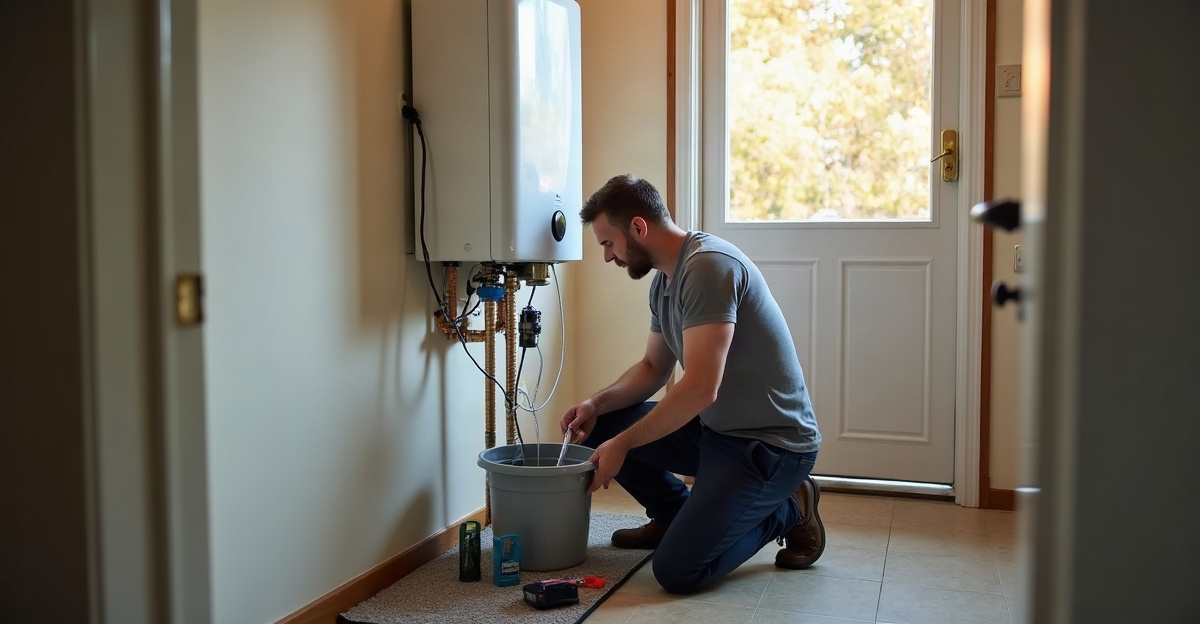
Tankless water heater maintenance prevents many repair needs. We remove mineral scale, clean filters, and test system performance before hot-water issues disrupt daily routines. Most units need professional service each year. Hard water, heavy demand, rental properties, and commercial use may require service more often.
Key Takeaways
- We recommend following the manufacturer’s maintenance requirements. We use annual professional service as a general guideline.
- Flushing and descaling remove mineral buildup. This buildup can reduce flow, cause temperature swings, create noise, and lower efficiency.
- Keep the area around the unit clear. Watch for leaks and error codes. We should only complete homeowner tasks that the manufacturer approves.
- Licensed technicians should handle gas connections, venting, electrical components, combustion parts, and sealed internal repairs.
- Call a qualified technician promptly for gas odors, carbon monoxide alarms, leaks near electrical parts, repeated shutdowns, or sudden hot-water loss.
Warning Signs That Need Professional Attention Now
Routine maintenance can reduce scale-related and wear-related problems, but it can’t prevent every malfunction. Active safety concerns and sudden performance failures need prompt tankless water heater repair, not another maintenance visit.
Call for help right away if there’s a gas smell near the unit, a carbon monoxide alarm, water leaking near electrical components, repeated shutdowns, or no hot water that disrupts tenants, customers, or daily operations. A gas smell water heater concern requires immediate attention. Leave the area if needed, avoid operating switches or flames nearby, and contact qualified help.
Tankless water heater error codes, ignition failures, leaks, unusual noises, changing temperatures, and inadequate hot water all point to a repair concern. Don’t reset the unit over and over or attempt to open sealed parts. Fast, honest service helps protect the property and restores dependable hot water with less disruption.
For urgent safety or hot-water failures, our emergency water heater service provides clear next steps. Rental properties and small businesses often need a quick response, especially when a loss of hot water affects residents, staff, or customers.
How Often a Tankless Water Heater Needs Maintenance
Annual professional maintenance is a good general baseline for many systems. Still, the best tankless water heater maintenance schedule depends on the specific unit and how it operates in the property.
Fuel type, model, manufacturer instructions, water quality, hot-water demand, and whether the system is condensing or non-condensing all affect service needs. We recommend checking the owner’s manual first and following its manufacturer-specific requirements rather than applying one schedule to every tankless unit.
Hard water deserves special attention. A hard water tankless water heater can collect mineral deposits faster than a unit supplied by softer water. Older units, large households, rental properties, and small businesses may also need service more often because their systems run harder and face greater daily demand.
If there’s uncertainty about how often should a tankless water heater be serviced, we can review the system, local water conditions, and usage pattern. Regular annual tankless water heater maintenance gives us a chance to address small concerns before they become inconvenient repairs.
The Essential Maintenance That Helps Prevent Breakdowns
Routine tankless water heater service includes flushing, filter cleaning, inspection, and performance checks. These steps help maintain steady water flow, efficient heating, and safe operation.
Tankless water heater flushing removes mineral scale, which is the hard-water deposit that can form inside the unit. Tankless water heater descaling focuses on breaking down and removing these deposits before they restrict water flow or interfere with heat transfer. Left in place, buildup can contribute to weaker hot-water flow, odd noises, inconsistent temperatures, lower tankless water heater efficiency, and avoidable repair needs.
Cleaning the water intake filter also matters. A clean tankless water heater filter supports proper flow through the system and helps prevent debris from causing performance trouble.
Condensing tankless models need attention to their venting and condensate components. The condensate drain carries away water created during the heating process. A professional checks that this drain, along with related parts, remains clear and operates as intended. We also inspect accessible internal components, check overall performance, and confirm that the unit is operating safely.
Safe Homeowner Checks vs. Work for a Licensed Technician
DIY tankless water heater maintenance should stay limited to simple monitoring and manufacturer-approved tasks. Basic checks can catch a developing issue early without creating a safety risk.
We recommend watching for visible leaks, reading displayed error codes, and noting changes in hot-water performance. Keep the area around the unit clear so air can circulate and service remains accessible. Review the owner’s manual for the model’s approved care instructions. If the manufacturer permits it, accessible filters may be monitored or cleaned according to those instructions.
A licensed tankless water heater technician should handle gas connections, combustion components, venting, electrical wiring, sealed internal parts, and internal repairs. These systems combine water, fuel or electricity, exhaust venting, and high temperatures. Gas water heater safety depends on proper testing and correct installation practices.
A professional tankless water heater inspection can also identify issues that aren’t visible from the outside. We check the parts that affect ignition, heat transfer, venting, drainage, and reliable hot-water delivery without asking property owners to take unnecessary risks.
Hard Water, High Use, and Other Factors That Change Maintenance Needs
Hard water contains minerals that can form scale inside the tankless water heater heat exchanger. The heat exchanger transfers heat to the water, so deposits on this component can reduce performance and make the system work harder.
Hard water scale buildup can develop faster in some properties than others. Homes with hard water may need more frequent flushing and may benefit from water treatment for tankless water heater systems. The right approach depends on water quality, the unit’s design, manufacturer guidance, and the property’s actual hot-water use.
Frequent demand also increases wear. Large households, rental units, and businesses may run a tankless unit for longer periods and across more fixtures. Consistent rental property water heater maintenance helps landlords avoid preventable disruptions, while commercial tankless water heater maintenance helps small businesses maintain daily operations.
Condensing and non-condensing systems also have different service considerations. Condensing units have condensate components that need inspection, while every model needs proper flow, venting where applicable, and clean internal pathways. We can assess the unit’s condition and help set a practical service interval based on local water quality and demand.
A Practical Plan for Reliable Hot Water
Reliable hot water starts with a simple plan. Review the owner’s manual, pay attention to performance changes, and keep a record of service dates and tankless water heater error codes. Scheduling maintenance before a failure occurs helps protect efficiency and limits surprise interruptions.
Maintenance and repair serve different purposes. Maintenance helps protect normal performance through flushing, descaling, cleaning, and inspection. Repairs correct active problems, including leaks, ignition trouble, repeated shutdowns, unusual noises, or insufficient hot water. If the system is already failing, review the signs that point to water heater repair or replacement before deciding on the next step.
Clear explanations and transparent pricing matter for every service call. Whether a property needs professional tankless water heater flushing, a tankless water heater inspection service, or active repairs, we explain what we find and what the work involves. Our water heating services support homeowners, landlords, and small business owners who want to prevent tankless water heater repairs and keep hot water available when it matters most.