
Tankless Water Heater vs. Tank: Which Is Right for Your Home?
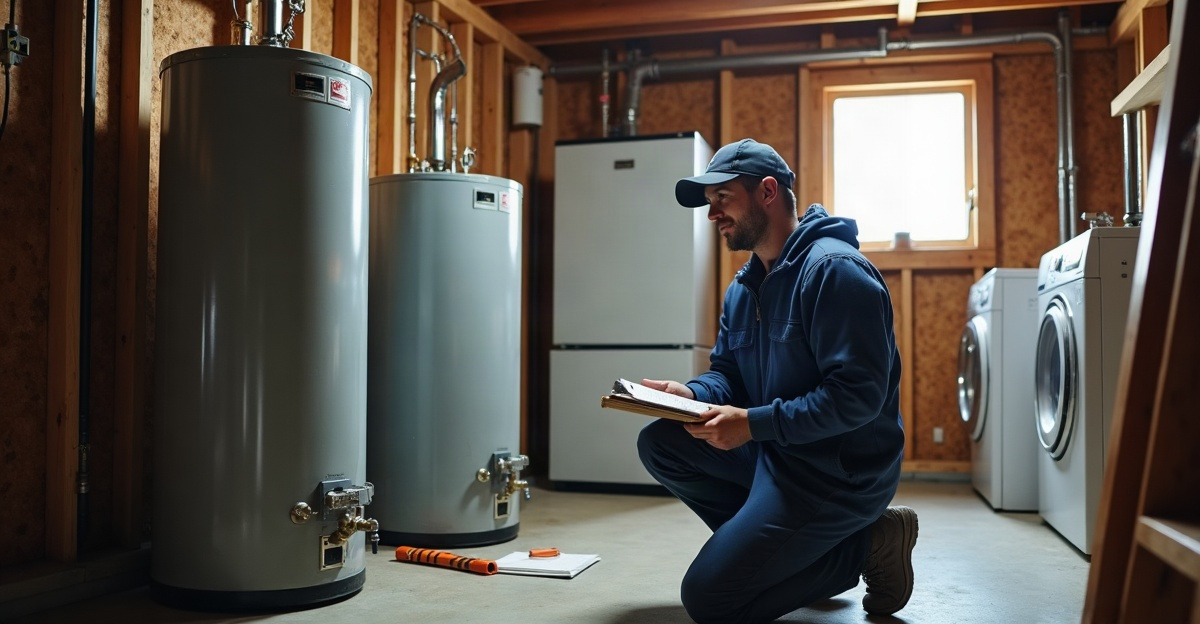
A tankless water heater vs. tank decision depends on our hot-water demand, available space, budget, fuel setup, and required property upgrades. Tankless units deliver continuous hot water within their rated flow capacity. Tank models often provide a quicker, lower-cost replacement when existing connections remain in place.
Key Takeaways
- Tankless heaters save floor space and reduce standby heat loss. However, they often cost more to install and may require gas, electrical, venting, plumbing, or drainage upgrades.
- Storage-tank heaters hold a limited hot-water supply. They often offer a practical option for urgent replacements and budget-focused projects.
- A tankless system requires sizing for simultaneous fixture use and local winter inlet-water temperatures. Cold conditions in Massachusetts and Southern New Hampshire can reduce available flow.
- Both options require routine maintenance, including flushing and inspections. We should address leaks, corrosion, inconsistent temperatures, and suspected gas issues promptly.
- An on-site assessment confirms the correct size, installation requirements, total project cost, and best option for a home, rental, multi-unit property, or business.
Quick Answer: Choose Based on Demand, Budget, and Installation Setup
In a tankless water heater vs. tank comparison, tankless systems work well for properties that need space savings and continuous hot water within a defined flow capacity. A storage-tank heater is often the simpler, lower-cost, and more practical choice for many homes, rentals, and fast replacements.
Neither option is automatically better. We recommend choosing based on household size, simultaneous hot-water demand, fuel source, available space, budget, venting and plumbing needs, and how long the owner expects to keep the property.
| Factor | Tankless Water Heater | Storage-Tank Water Heater |
|---|---|---|
| How it works | Heats water as it moves through a heat exchanger. | Stores and reheats a set supply of hot water. |
| Equipment and installed cost | Equipment may cost more, and installation can require upgrades. | Often has a lower upfront cost and a simpler replacement process. |
| Energy use | Avoids most standby heat loss by heating water on demand. | Can lose heat while stored water sits in the tank. |
| Hot-water availability | Continuous hot water within the unit’s rated flow capacity. | Limited by stored hot water and recovery time. |
| Simultaneous use | Multiple fixtures can exceed the unit’s flow capacity. | Several fixtures draw from the stored supply until it is depleted. |
| Cold-weather performance | Available flow can drop as incoming water gets colder. | Recovery may take longer, but tank capacity remains fixed. |
| Typical lifespan | Can have a longer potential service life with proper care. | Often has a shorter potential service life than tankless equipment. |
| Maintenance | Usually needs flushing or descaling to control mineral buildup. | Benefits from flushing and inspections of key safety components. |
| Space needs | Wall-mounted and compact. | Needs dedicated floor space. |
| Installation complexity | May need gas, electrical, venting, drainage, or plumbing changes. | Often straightforward when replacing a similar existing unit. |
| Best fit | Space-limited homes with steady hot-water demand. | Budget-focused replacements and predictable demand patterns. |
| Potential drawback | Higher project cost and flow limits during peak demand. | Standby heat loss and a finite supply of stored hot water. |
Choose a tankless system when floor space is limited, hot-water use is steady rather than heavily simultaneous, and the property can support the installation work. Consider a tank system when upfront cost matters most, replacement needs to happen quickly, or gas, electrical, and venting upgrades would make a tankless project disproportionately expensive.
We recommend a professional assessment for older properties, large households, frequent simultaneous fixture use, multi-unit buildings, and commercial applications. Our water heating services team can review the full project before any equipment decision is made.
How Tankless and Tank Water Heaters Perform in Everyday Use
A traditional tank water heater keeps a set volume of water heated and ready for use. Once the household uses that stored supply, the unit needs time to heat a new supply. This is why a home can run out of hot water after several showers or other high-demand uses. Our guide on running out of hot water explains common causes.
A tankless unit heats water as it passes through the system. It does not store a large reserve of heated water. This can provide continuous hot water for as long as demand stays within the unit’s capacity.
Endless hot water does not mean unlimited hot water for unlimited fixtures at once. Flow rate is the amount of hot water a unit can provide at one time, generally measured in gallons per minute. A shower, dishwasher, washing machine, and another shower running together may exceed a single tankless unit’s available flow.
In a tank vs. tankless water heater decision, energy use also matters. Tank models may lose some heat while water waits in storage, called standby heat loss. Tankless systems avoid most standby loss because they heat water only during use. Actual utility costs still depend on usage habits, fuel type, equipment efficiency, temperature settings, installation quality, and local utility rates.
Tankless units often have a longer potential service life than standard tank systems when installed and maintained correctly. Water quality, maintenance, household demand, model selection, and installation conditions all affect real-world lifespan.
Installed Cost Matters More Than Equipment Price
The water heater’s purchase price is only one part of the project. Total installed cost includes labor, permits, removal of the old unit, needed upgrades, materials, and site conditions.
Replacing a tank heater with another tank model is often straightforward when the new unit can use the same location, fuel source, venting, plumbing connections, and electrical setup. That makes a tank replacement a practical choice for many urgent replacements.
A tankless installation may require gas-line sizing changes, added electrical circuits, new venting materials or routes, water-line modifications, condensate drainage, access work, permits, and code-related updates. High-efficiency gas tankless models may be condensing units. These units capture additional heat from exhaust gases and create condensate, which is water produced during that process and requires a proper drainage route.
Manufacturer instructions, applicable plumbing, electrical, and fuel-gas codes, plus local permitting requirements, should guide the final installation plan. An on-site evaluation gives homeowners, landlords, and business owners a clear scope and transparent price before work begins. For help weighing a failing unit, review repair versus replacement signs.
Cold-Weather Hot-Water Capacity in Massachusetts and Southern New Hampshire
In Methuen, the Merrimack Valley, the North Shore, and Southern New Hampshire, winter water temperatures have a direct effect on tankless performance. A tankless unit’s available gallons per minute depends on incoming groundwater temperature and the desired outlet temperature.
Temperature rise means the difference between the cold water entering the unit and the temperature needed at the tap. Colder incoming water requires more heating work. During Massachusetts and Southern New Hampshire winters, a tankless system may deliver less flow than manufacturer ratings based on warmer inlet-water conditions.
Tankless water heaters can work very well in cold climates when properly sized for local winter conditions. A single shower may be manageable for many correctly selected systems. Several showers, laundry, dishwashing, and other fixtures running together may call for a larger tankless model, multiple units, or another water-heating approach.
We do not recommend selecting a tank size or tankless flow rate without reviewing fixture demand, household habits, water temperature, fuel availability, and the building layout. Higher-demand homes, multi-unit properties, and businesses often need a professional load calculation and may require multiple units or commercial-grade equipment.
Maintenance, Lifespan, and Signs Your Water Heater Needs Attention
Maintenance Matters
Neither water heater tank vs. tankless option is maintenance-free. Tankless systems typically need periodic flushing or descaling, especially where mineral content creates scale buildup. Tank heaters benefit from flushing and inspection of the anode rod, pressure-relief valve, and related components. An anode rod is a component inside many tank heaters that helps protect the tank from corrosion.
Manufacturer requirements, water conditions, and professional recommendations should determine the maintenance schedule. Regular care can support performance and service life, but it cannot guarantee a fixed lifespan.
Arrange service or a replacement evaluation if you notice any of the following:
- Water around the unit, active dripping, or visible corrosion
- Rust-colored or metallic-smelling water
- Rumbling, popping, or banging noises from a tank
- Inconsistent temperatures or reduced hot-water supply
- Repeated repairs or a unit near the end of its expected service life
A gas smell, suspected combustion concern, or active leak needs prompt attention. Follow appropriate safety steps and contact a qualified professional. Many water-heater concerns can be planned, but no hot water, active leaks, and suspected gas or combustion issues deserve faster service. For prompt local guidance, see water heater repair in Massachusetts.
Which Water Heater Fits Your Home, Rental, or Business Property?
A couple in a smaller home replacing a leaking tank heater may prefer another properly sized tank model for a lower-complexity, budget-conscious solution. A homeowner with limited mechanical-room space may benefit from a wall-mounted tankless unit.
A family with several bathrooms and frequent simultaneous showers needs careful sizing. A tankless model may work with the right capacity or multiple units, while a larger tank or hybrid configuration may better match peak demand. Landlords should weigh replacement cost, tenant demand, serviceability, and long-term maintenance across all units.
Small restaurants, salons, offices, and multi-unit properties may need commercial-grade equipment, multiple heaters, or a formal load calculation. Our professional service team can assess both immediate needs and long-term operating demands.
Decision Checklist
Before choosing between tankless vs. tank water heater options, review these practical questions:
- How many people use hot water regularly?
- How often do showers, laundry, dishwashing, and other fixtures run at the same time?
- Is the current system gas or electric, and can the property support needed upgrades?
- Is mechanical-room floor space limited?
- Does lower upfront cost matter more than possible long-term efficiency benefits?
- Is the property a primary home, rental, multi-unit building, or small business?
- Is this an emergency replacement or a planned upgrade?
Is a tankless water heater worth it in Massachusetts or Southern New Hampshire? It can be, especially where space is tight and demand is steady, but winter sizing and installation upgrades must be part of the decision.
Can a tankless water heater run two showers at once? Some can, depending on winter inlet-water temperature, shower flow, and total fixture demand. Proper sizing is essential.
Is it cheaper to replace a tank heater with another tank? Often, yes, particularly when existing connections and venting can remain in place. For cost context, read water heater repair costs.
Do tankless water heaters require a larger gas line? Some gas models do, based on their input requirements and the property’s existing gas capacity. An assessment confirms what the installation needs.
Which system is better for a rental or small business? The answer depends on demand, maintenance planning, service access, downtime concerns, and replacement budget.
Not sure which system fits the property? Schedule an on-site assessment to review hot-water demand, fuel and venting setup, installation options, and total project cost before choosing.
Last reviewed: September 23, 2026. We review this guidance regularly as equipment standards, incentives, and local requirements change.