
Water Heater Repair vs Replacement: Key Signs to Know
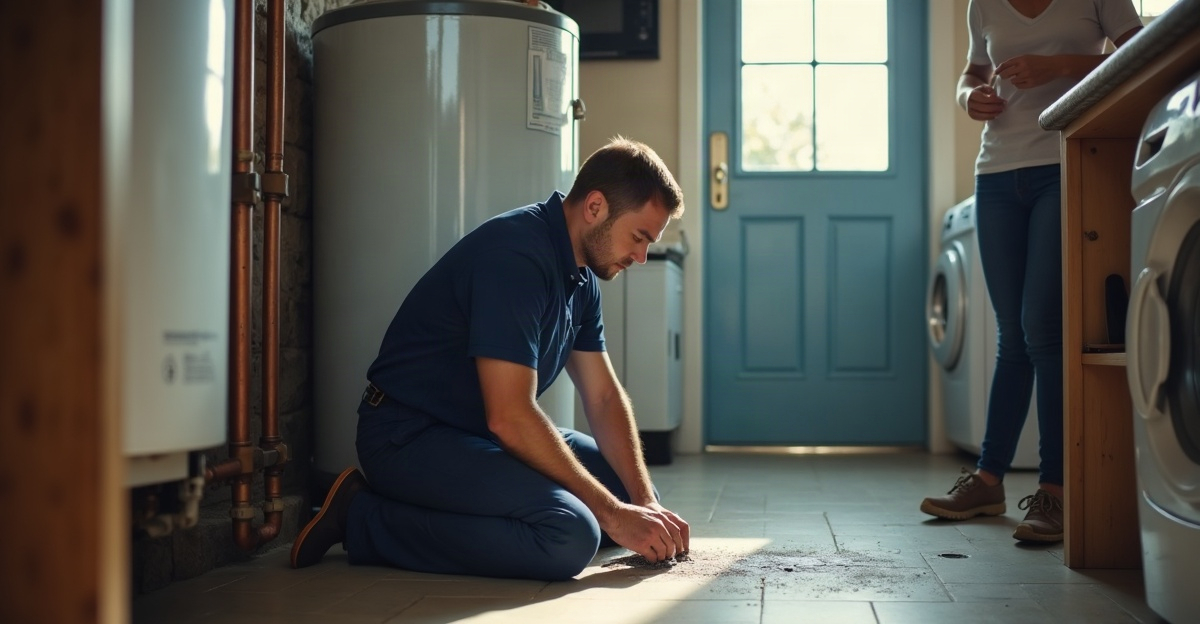
Recognizing water heater repair versus replacement signs helps us act quickly when leaks, corrosion, repeat failures, or limited hot-water supply disrupt a home or business. A sound tank with one failed component may support a repair. Tank leaks, major corrosion, and repeated service calls often call for replacement.
Key Takeaways
- A leak at a fitting, valve, or external pipe may allow a repair. Water from the tank body or bottom seam usually calls for replacement.
- Newer units with an intact tank and one isolated issue often make strong repair candidates.
- Rusty hot water, heavy corrosion, recurring error codes, and frequent failures signal a need for a professional replacement assessment.
- We should compare repair costs with the unit’s remaining service life, efficiency, maintenance record, and ability to meet daily hot-water demand.
- Gas odors, suspected carbon monoxide exposure, or leaks near electrical equipment require immediate safety action and fast professional support.
Should We Repair or Replace Our Water Heater?
The right decision starts with the condition of the tank and the type of problem. We usually recommend repair for an isolated, cost-effective issue on a unit with a sound tank. Replacement is often the better choice when the tank is failing, corrosion is severe, repairs keep adding up, performance has declined, or the system no longer provides enough hot water.
A water heater repair vs. replacement decision should never be based on age alone. We consider the unit type, tank condition, maintenance record, repair frequency, efficiency, fuel source, available space, venting, electrical capacity, local permits and codes, recovery rate, and daily hot-water demand.
Conventional tank water heaters often last approximately 8 to 12 years. Actual lifespan varies based on water quality, maintenance, installation quality, usage, model type, and operating conditions. Tankless and heat-pump water heaters have different service-life expectations and maintenance requirements.
A qualified technician can determine whether repair is practical or whether replacement provides better long-term value. Replacement is not the automatic answer. Our goal is to provide an honest recommendation that protects your comfort, safety, and budget.
Take These Safety Steps Before Checking the Unit
A gas smell near a water heater requires immediate attention. Leave the area if necessary, avoid flames, sparks, and electrical switches, and contact the gas utility or emergency services as appropriate.
Suspected carbon monoxide exposure also requires quick action. Move to fresh air and seek emergency help. Carbon monoxide has no reliable odor, so symptoms such as headache, dizziness, nausea, confusion, or unusual fatigue near fuel-burning equipment should never be ignored.
An emergency water heater leak near electrical equipment can create another serious hazard. Turn off power only if it is safe to do so, avoid standing water, and call for professional help. Our emergency HVAC service can help address urgent system problems promptly.
Never attempt to repair gas lines, combustion components, electrical wiring, or pressure-relief equipment. The T&P relief valve, also called the temperature-and-pressure relief valve, is an important safety device and should not be repaired or altered by a homeowner.
Safe observations can still help speed up diagnosis. You can check whether an electric unit’s breaker has tripped, confirm the thermostat setting, look for visible drips at fittings, note displayed error codes, and locate the approximate age through installation records or the serial number.
Any work involving gas, electricity, pressure, or internal components belongs with a qualified professional. No hot water, active leaks, and recurring problems deserve calm, prompt attention.
Signs Our Water Heater May Be Worth Repairing
Water heater repair often makes sense when the unit is newer, the issue is isolated, it is the first major repair, and the tank shows no corrosion. Many common problems involve replaceable components rather than tank failure.
A failed heating element, thermostat or control issue, ignition problem, faulty valve, minor connection leak, loose fitting, drain-valve issue, T&P valve discharge, or external plumbing leak may be repairable after a proper inspection. For direct help with these concerns, our water heater services team can locate the actual source of the problem.
Match the Symptom to the Next Step
No hot water may result from a tripped breaker, heating-element failure, thermostat problem, control fault, ignition issue, or another component concern. A no-hot-water repair call should include professional testing rather than guesswork.
Not enough hot water may point to a heating component, thermostat setting, sediment buildup, recovery-rate limits, or increased household demand. If hot water runs out faster than expected, our guide on running out of hot water explains several common causes.
Water that is too hot or changes temperature without warning can indicate a thermostat or control problem. Have this assessed promptly, especially where scalding is possible.
Water heater rumbling or popping can be associated with sediment buildup in tank units. Mineral content can contribute to accumulation, but a technician should inspect the unit before identifying the cause. Recurring error codes may also be repairable, although repeated codes deserve a closer look to confirm that the repair will last.
Cold incoming groundwater in Massachusetts and Southern New Hampshire can increase the heating work required to supply hot water, especially during colder months. This seasonal change can affect perceived performance and hot-water demand without necessarily meaning the unit has failed.
Signs Replacement May Be the Better Investment
A leaking water heater repair or replacement decision depends heavily on where the leak begins. Leaks from loose connections, fittings, drain valves, the T&P relief valve, or external plumbing are often repairable. Water leaking from the tank body or bottom seam usually signals internal tank failure and commonly requires replacement.
A water heater leaking from the bottom is especially concerning because internal corrosion often causes it. A corroded tank generally cannot be reliably repaired. Active pooling should be addressed quickly to limit water damage and reduce electrical risk.
Other replacement-level warning signs include severe corrosion, frequent breakdowns, repair costs that do not fit the unit’s remaining service life, inadequate hot-water capacity, and rising utility bills from an older, inefficient system. Replacement can also make sense when the current unit no longer supports normal household, rental-property, or small-business use.
Rusty, brown, or cloudy hot water deserves prompt inspection. If cold water is clear but hot water is rusty, the tank or internal components may be deteriorating. This symptom does not always confirm tank failure, but it should not be ignored.
Frequent repairs and recurring error codes are another clear signal to compare options. One repair may be reasonable, but a pattern of failures means it is time to evaluate the expected remaining service life before approving another repair.
Tank leaks, suspected corrosion, and repeated failures need prompt service. Isolated noises or gradual performance changes can often be scheduled for evaluation when no safety issue is present.
Compare Repair Cost, Remaining Life, and Long-Term Performance
A professional water heater inspection begins with the basics: confirming the type and age of the unit, locating leaks, testing heating components and controls, checking for corrosion, reviewing maintenance history, and considering daily hot-water demand.
Water heater repair cost vs. replacement cost should include more than the immediate invoice. We weigh the repair against remaining service life, tank condition, past repairs, current efficiency, and whether the system still meets daily demand. Costs vary by system type, size, fuel source, access, venting changes, permit requirements, code upgrades, labor, and local conditions.
An on-site assessment and written estimate provide the clearest comparison of practical options. We explain what needs attention now, what may fail later, and whether repair remains the sensible choice.
Common Repair or Replacement Questions
Is it worth repairing a 10-year-old water heater? It depends on tank condition, maintenance and repair history, efficiency, and the repair needed. Ten years alone does not automatically mean replacement.
Can a leaking water heater be repaired? A fitting, valve, or connection leak may be repairable. A tank-body or bottom-seam leak commonly requires replacement.
Should we replace a water heater before it fails? Planned replacement is worth considering when a unit is aging, repeatedly failing, corroding, losing efficiency, or no longer meeting hot-water needs.
Water heaters are generally separate from central heating and cooling equipment. Indirect water heaters and boiler-connected systems require specialized evaluation because they use the home’s boiler system. Our overview of how boilers work can help clarify that setup.
Choose a Replacement That Fits Our Home or Business
Water heater replacement options generally include conventional storage-tank units, tankless systems, and heat-pump water heaters. Each option can work well in the right application. The best choice depends on usage patterns, fuel availability, electrical and venting requirements, installation space, budget, recovery rate, and expected hot-water demand.
Recovery rate is the amount of hot water a unit can heat and deliver over a set period. It matters in busy homes, rental properties, and small businesses where multiple showers, appliances, or fixtures may run close together.
A larger tank is not automatically the right answer. Tankless vs. traditional water heater decisions also require careful sizing. We account for simultaneous showers, laundry, dishwashing, tenant demand, business use, and the temperature of incoming water before recommending equipment.
Heat-pump water heaters can be a strong option where electrical capacity and installation conditions support them. Tankless systems can provide long runs of hot water when properly sized and installed. A conventional tank may remain the most practical choice for many properties because of installation needs, budget, and daily usage.
Schedule an inspection if the unit leaks, produces discolored water, repeatedly fails, makes unusual noises, causes rising operating costs, or no longer keeps up with hot-water needs. Contact us through our water heater scheduling page for straightforward guidance, transparent options, and dependable service.