
Boiler Losing Pressure: When Should You Call for Repair?
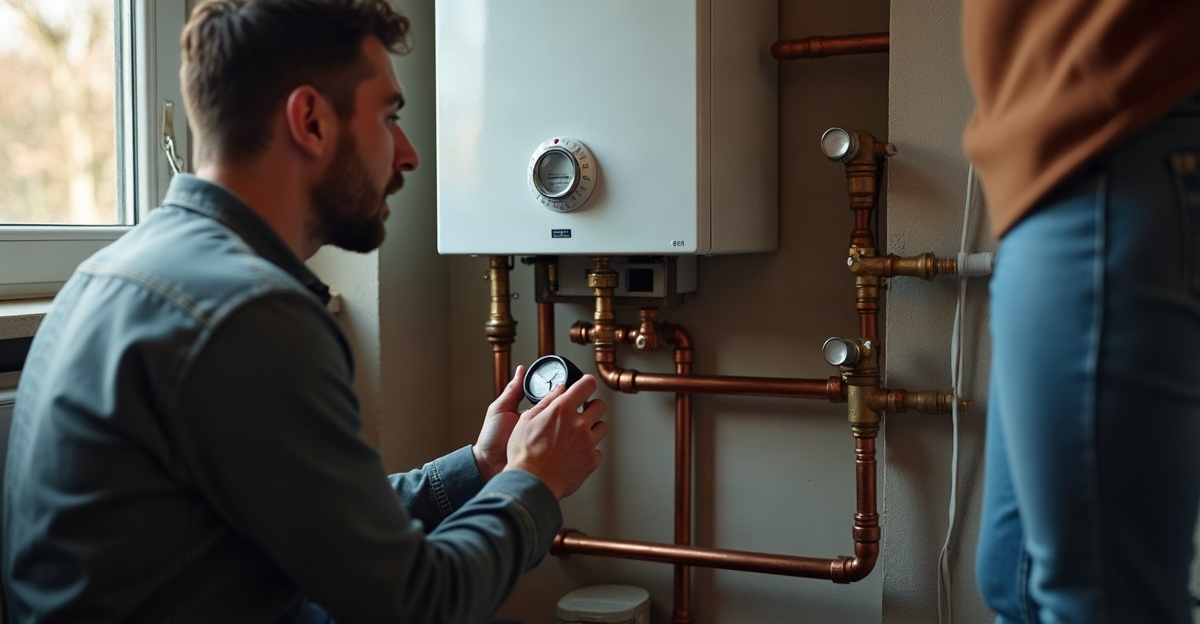
A boiler that loses pressure once after we bleed radiators or the system cools may only need a manufacturer-approved top-up. Repeated or rapid pressure loss usually needs professional repair. We recommend urgent help if pressure issues occur with active leaks, water near electrical equipment, no heat during cold weather, error codes, unusual noises, or major pressure swings.
Key Takeaways
- Repeated pressure loss may indicate a hidden leak, pressure-relief valve fault, expansion vessel issue, or an internal boiler problem.
- We recommend checking the pressure gauge while the system is cold, then checking it again after heating runs. Record any sharp drops or excessive rises.
- Inspect accessible radiators, valves, exposed pipes, and the boiler casing for damp patches, corrosion, stains, or drips.
- A one-time top-up may suit the system if the boiler manual allows it. Repeated repressurizing can conceal a developing fault.
- Leave the property and contact gas emergency services if we smell gas or a carbon monoxide alarm sounds. Do not investigate the source.
Call for Urgent Help Now If Pressure Loss Comes With These Warning Signs
A boiler losing pressure needs urgent attention when water is actively escaping from the boiler or pipework. Treat significant leaks, visible property damage, or water near electrical components as an immediate safety and property-protection concern.
Arrange urgent service if pressure drops rapidly, changes dramatically, or rises excessively while the heating runs. Persistent error codes, loud or unusual sounds, and a complete loss of heat or hot water also call for prompt help. Our urgent HVAC repair guide explains other signs that shouldn’t wait.
No heat during freezing or near-freezing weather deserves fast action in Massachusetts and Southern New Hampshire. Residents, tenants, pipes, and business operations can all be at risk. For immediate support, contact emergency HVAC service rather than guessing at a repair.
If there is a suspected gas smell or a carbon monoxide alarm, leave the property or move into fresh air immediately. Avoid flames, smoking, and electrical switches. Contact the appropriate gas emergency service, then arrange assistance from a qualified heating professional. Don’t investigate the source. Our guide to HVAC emergency signs can also help clarify when fast action is needed.
Urgent service should protect people, the property, and the heating system. We focus on finding the cause safely, rather than treating a serious warning sign as a simple pressure adjustment.
Why Is My Boiler Losing Pressure—and Is It Always a Repair Problem?
A boiler that loses pressure once may only need monitoring or a manufacturer-approved top-up. A boiler that keeps losing pressure usually needs professional diagnosis.
Many sealed boiler systems commonly read around 1–1.5 bar when cold and rise somewhat during operation. The correct pressure range depends on the boiler and heating system, so check the boiler manual and manufacturer guidance. A clear understanding of how a boiler works helps explain why pressure changes as water heats and cools.
A one-time pressure decrease after bleeding radiators or after the system cools can be normal. Pressure that repeatedly falls after a top-up is not normal. Rapid changes, repeated drops, or excessive pressure increases while heating is on should be checked by a qualified technician.
Why does my boiler keep losing pressure after it has been topped up? In many cases, water is leaving the system through a leak or a faulty component is affecting pressure control. Topping up may restore heat for a short time, but it doesn’t repair the cause and can hide a developing issue. For a broader explanation of heating circulation and operation, see how home boilers heat a house.
Common Reasons a Boiler Keeps Losing Pressure
Small visible leaks are a common reason for a boiler losing pressure. Check accessible radiator valves, pipe joints, towel rails, exposed pipes, and the outside of the boiler for dampness, staining, corrosion, or drips.
Some leaks remain hidden below floors, behind walls, or within concealed pipework. A lack of visible water doesn’t rule out a leak. That is one reason why a boiler keeps losing pressure is often not something that can be answered through a quick visual check alone.
A pressure-relief valve is a safety valve that releases water if pressure becomes too high. Water coming from the discharge pipe outside may show that this valve has released. An expansion vessel helps control normal pressure changes as the system heats and cools. If it stops working correctly, pressure may climb too high when hot and then fall after the system cools.
Internal boiler faults can also cause pressure problems. These require qualified diagnosis and are not DIY repairs. We inspect visible system leaks, observe pressure while the boiler heats and cools, review error codes, and test relevant components where appropriate. We provide an honest assessment because the cause determines the repair. Some issues are straightforward, while others need further investigation or replacement parts.
Unusual sounds alongside changing pressure can offer another useful clue. Read about boiler banging noises, then arrange service if the sound continues or occurs with a pressure fault.
Safe Checks to Make Before You Call a Professional
Record the pressure gauge reading while the system is cold, then check it again after the heating has run. Note whether the pressure falls, rises excessively, or changes sharply. This information helps us assess the fault faster.
Look around accessible radiators, valves, towel rails, exposed pipes, and the boiler exterior for water, damp spots, staining, corrosion, or drips. Where it is safely accessible, check whether the pressure-relief discharge pipe outside is releasing water.
Make a note of error codes, unusual sounds, loss of heat or hot water, and how often the system needs a top-up. Consult the boiler manual before using a filling loop or any manufacturer-provided pressure top-up process.
A one-time top-up may be reasonable when manufacturer guidance supports it and there is a clear one-off reason, such as after radiator bleeding. Repeated repressurizing should never become a routine workaround. Don’t remove the boiler case, repair pipework, adjust internal parts, recharge or replace an expansion vessel, service a pressure-relief valve, or work on gas connections. Those tasks require a suitably qualified heating professional.
If heating has already stopped, follow these practical steps for heating not working while arranging professional help.
When to Schedule Boiler Repair for Recurring Low Pressure
Schedule boiler repair if the boiler keeps losing pressure after a top-up, even if no visible leak appears. Professional service is appropriate for recurring low pressure, visible or suspected hidden leaks, error codes, unreliable heat or hot water, abnormal pressure swings, or water from the pressure-relief discharge pipe.
Small leaks can get worse over time. Concealed leaks may affect floors, walls, and other parts of the property before they become obvious. A qualified technician can identify whether the issue involves a leak, valve problem, expansion vessel fault, or another system concern before it leads to heat loss or property damage.
Reliable heat matters for homeowners, landlords, property managers, and small business owners responsible for one to twenty residential units. We provide prompt availability, clear explanations, transparent pricing, and dependable local support across Methuen, the North Shore, Merrimack Valley, and Southern New Hampshire. Arrange professional heating service for a clear assessment and practical next steps. Our local service areas page confirms the communities we serve.
Boiler Pressure Questions Homeowners Ask
Why does my boiler keep losing pressure?
Repeated pressure loss usually points to an underlying leak, a pressure-relief valve issue, an expansion vessel fault, or an internal boiler problem. Professional diagnosis identifies the cause without relying on repeated top-ups.
Can a boiler run with low pressure, and why does pressure rise during heating?
Follow the boiler manual, as low pressure can prevent reliable heating or trigger a fault code. A one-time pressure drop after bleeding radiators can be normal, but pressure should not need frequent topping up. A boiler can also lose pressure without a visible leak because water may escape through concealed pipework or a faulty component.
Some pressure increase during heating is normal as water warms. Excessive rises or dramatic changes may indicate an expansion vessel or pressure-relief valve issue and should be assessed by a qualified technician. If the boiler is losing pressure repeatedly, prompt repair is the safest long-term answer.