
How a Home Boiler Works and Heats Your House
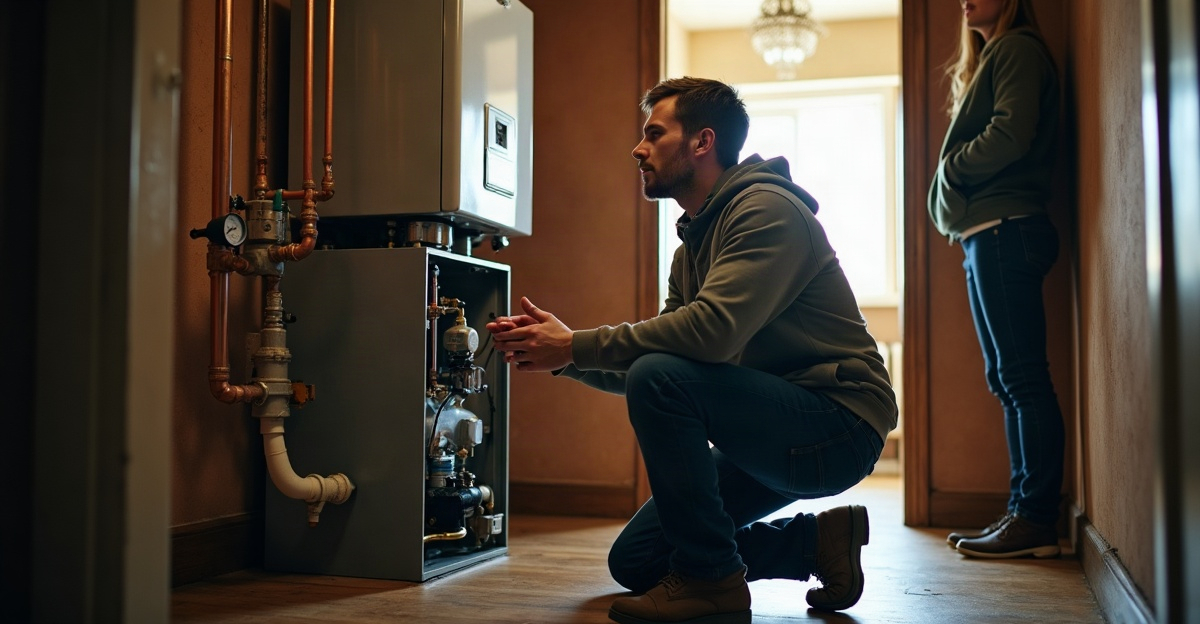
A home boiler heats water or creates steam. It then sends heat through radiators, baseboards, or radiant-floor tubing until the thermostat reaches its set temperature. Unlike a furnace, a boiler provides steady heat through sealed pipes instead of blowing warm air through ducts.
Key Takeaways
- A thermostat calls for heat, and the boiler’s burner or electric element heats the water inside the system.
- Hot-water boilers use a circulator pump to move heated water through pipes. Steam boilers send steam to radiators, then collect condensed water for reuse.
- Key boiler components include the heat exchanger, circulator pump, radiators or baseboards, expansion tank, pressure gauge, and pressure-relief valve.
- New banging, whistling, grinding, leaks, repeated shutdowns, pressure issues, or uneven heat require prompt professional service.
- No heat during freezing weather, a gas odor, or a carbon monoxide alarm requires immediate action. We should protect occupants and prevent property damage.
How Does a Boiler Work in a Home?
If you are wondering how does a boiler work in a home, the process starts with the thermostat. When the indoor temperature falls below the setting, the thermostat tells the boiler to begin a heating cycle.
The boiler heats water using gas, oil, electricity, or another energy source. The heated water or steam then travels through pipes to heating units throughout the home.
These units release heat into each room. Once the thermostat reaches the desired temperature, the boiler stops heating.
Homes with boiler problems may need professional heating services to find problems with burners, pumps, controls, valves, or other components.
Step 1: The Thermostat Calls for Heat
The thermostat measures the temperature inside the home. When the temperature drops, it sends a signal to the boiler.
Modern systems may also use several heating zones. Each zone can have its own thermostat and control valve.
This setup allows homeowners to heat certain parts of the house without heating every room equally.
Step 2: The Boiler Heats the Water
After receiving the thermostat signal, the boiler starts its burner or electric heating element.
In a gas or oil boiler, combustion creates heat. A heat exchanger transfers that heat into the water without mixing the combustion gases with the water.
The boiler continues heating until the water reaches the correct operating temperature.
Step 3: Heat Moves Through the House
In a hot-water boiler, a circulator pump pushes heated water through supply pipes.
The water travels to:
- Radiators
- Baseboard heaters
- Radiant-floor systems
- Other hydronic heating equipment
Heat moves from the water into the surrounding room. The cooler water then flows through return pipes and back to the boiler.
The boiler can heat it again during the next cycle.
Step 4: The Boiler Shuts Off
When the thermostat detects the correct room temperature, it stops calling for heat.
The burner shuts down. Depending on the system, the circulator may continue operating briefly to move remaining heat through the home.
The cycle begins again when the indoor temperature falls.
Hot-Water Boilers vs Steam Boilers
Boilers generally use either hot water or steam to transfer heat.
Hot-Water Boilers
Hot-water systems are also known as hydronic heating systems. They heat water without turning it into steam.
A circulator pump sends the water through a closed network of pipes. After giving off its heat, the cooler water returns to the boiler.
Because the water is reused, a properly operating system does not constantly need new water.
Steam Boilers
Steam boilers heat water until it becomes steam. The steam rises through pipes and enters radiators.
As the radiators release heat, the steam cools and condenses back into water. That water returns to the boiler so the process can begin again.
Steam systems are common in some older homes and require different controls and maintenance than hot-water boilers.
What Are the Main Parts of a Home Boiler System?
Understanding the major components can make boiler operation easier to understand.
Burner and Heat Exchanger
The burner creates heat in fuel-fired systems. The heat exchanger transfers that energy into the water.
Problems with either component can reduce heating performance or cause the boiler to shut down.
Circulator Pump
Hot-water systems usually depend on a circulator pump.
The pump keeps heated water moving through the system. A damaged pump can cause cold rooms even if the boiler itself is producing heat.
Expansion Tank
Water expands as it becomes hotter. The expansion tank provides space for that additional volume and helps control system pressure.
Pressure-Relief Valve
A boiler must operate within a safe pressure range. The pressure-relief valve is an important safety device that releases excess pressure when necessary.
Homeowners should never block, modify, or attempt to defeat this safety component.
Radiators, Baseboards, and Radiant Floors
These components transfer heat from the boiler water into the rooms.
Poor circulation, trapped air, damaged valves, or buildup inside the system can sometimes cause uneven heating.
Is a Boiler the Same as a Water Heater?
A boiler and a water heater are not always the same thing.
A boiler is mainly designed to heat the home. A water heater provides hot water for showers, sinks, washing machines, and other household needs.
Some boilers can also provide domestic hot water through an indirect tank or combination system.
If the problem involves household hot water rather than space heating, professional water heating services can help identify the correct system and repair needs.
Why Do Boilers Provide Steady Heat?
Boiler systems do not depend on forced air. Instead, they distribute heat through water or steam.
Radiators, baseboards, and heated floors can continue releasing warmth after the boiler finishes a heating cycle.
This creates the steady type of warmth many homeowners associate with hydronic heating.
Boilers also avoid relying on heating ducts. However, they still require regular inspection and maintenance to operate safely and reliably.
For homes with several types of heating and cooling equipment, HVAC general services can help address the entire comfort system.
What Boiler Problems Should Homeowners Watch For?
A boiler often provides warning signs before a larger failure occurs.
Watch for:
- Rooms that stay colder than normal
- Radiators that heat unevenly
- Banging or knocking sounds
- Whistling or grinding noises
- Water around the boiler
- Frequent pressure changes
- Repeated system shutdowns
- Boiler controls that do not respond
- Heating bills that rise without an obvious reason
- A boiler that runs but fails to heat the house properly
Small changes should not be ignored. A worn pump, faulty valve, pressure problem, or control issue can become more serious if left unresolved.
How Can Regular Boiler Maintenance Help?
Regular maintenance gives a technician an opportunity to inspect the system before the heating season places it under heavy demand.
A boiler inspection may involve checking:
- System pressure
- Safety controls
- Electrical connections
- Circulator operation
- Valves and fittings
- Signs of leaks
- Combustion performance
- Venting and exhaust components
- Thermostat operation
Professional maintenance can also identify aging parts before they cause a sudden loss of heat.
Homeowners who need boiler inspection, repair, or other heating support can turn to JP Heating & Cooling Services for help with their home’s comfort systems.
When Is a Boiler Problem an Emergency?
Some boiler problems can wait for a scheduled service visit. Others require immediate attention.
A boiler issue may be urgent when:
- There is no heat during dangerously cold weather
- You smell natural gas or another fuel
- A carbon monoxide alarm activates
- Water is leaking rapidly
- The boiler repeatedly trips electrical protection
- Pressure rises into an unsafe range
- Pipes are at risk of freezing
Do not attempt to dismantle a boiler or bypass a safety control.
If a serious heating failure threatens the home or its occupants, request emergency HVAC services as soon as possible.
Frequently Asked Questions
How long does a home boiler usually last?
Many boilers can operate for 15 years or longer when they are installed correctly and maintained regularly. Actual lifespan depends on the boiler type, water conditions, maintenance history, and how heavily the system is used.
Does a boiler use electricity?
Even gas and oil boilers usually require electricity. Electrical power may operate the thermostat, circulator pump, ignition system, control board, zone valves, and other components.
Does a boiler constantly use new water?
A typical hot-water boiler operates as a closed-loop system. The same water circulates through the boiler and heating pipes repeatedly. Frequent water loss may indicate a leak or another problem that needs inspection.
Why are some radiators hot while others stay cold?
Uneven radiator temperatures can result from trapped air, circulation problems, closed valves, zone-control issues, or system buildup. A technician can inspect the system and determine why heat is not reaching certain areas.
How often should a home boiler be serviced?
An annual professional inspection is a good approach for many residential boilers. Regular service can identify leaks, pressure problems, worn components, and combustion concerns before the heating season.
Keep Your Boiler Ready for Cold Weather
Understanding how your boiler works makes it easier to recognize when something is wrong. The thermostat, boiler, pumps, pipes, and heating units must all work together to keep your home comfortable.
If your boiler is making unusual noises, leaking, losing pressure, or failing to heat rooms evenly, professional inspection can help prevent a larger breakdown.
JP Heating & Cooling Services can help with boiler and home heating concerns. To schedule service or discuss a heating problem, contact us today.