
Boiler Making Banging Noise? Here’s What It Could Mean
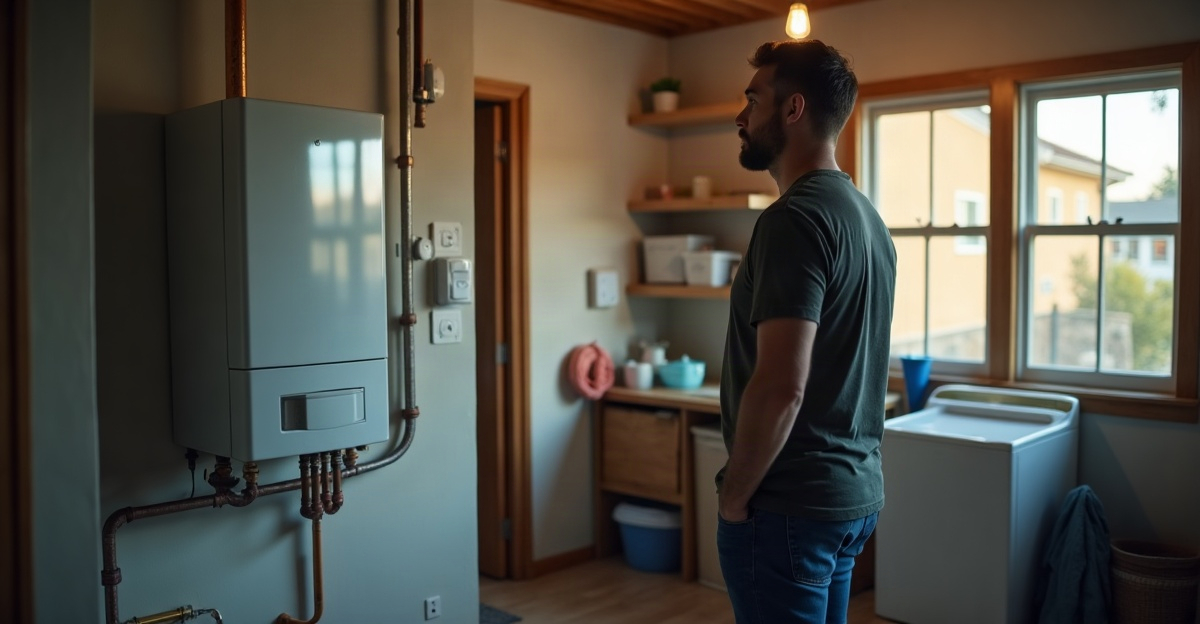
A boiler that makes a banging noise may indicate trapped air, mineral buildup, circulation faults, pressure problems, moving pipes, or an internal failure. Light ticking may result from normal pipe expansion. However, loud, persistent, or worsening banging needs prompt professional service, especially with leaks, odors, error codes, or heat loss.
Key Takeaways
- We should leave the building and call emergency services from outside if we smell gas, notice smoke or burning odors, see major leaks or damage, hear violent banging, or a carbon monoxide alarm sounds.
- We shouldn’t remove boiler panels, adjust gas controls or pressure settings, or attempt internal repairs. Instead, we should note when the noise occurs and record any visible warning signs.
- Trapped air, scale buildup, failing circulation parts, pressure-control faults, and loose pipes can cause banging and uneven heating.
- We recommend prompt service for repeated banging, cold rooms, frequent resets, pressure changes, error codes, drips, or unexpected shutdowns.
- Banging doesn’t always mean we need a boiler replacement. A qualified technician can identify the cause and clearly explain the safest repair or replacement options.
Is a Banging Boiler Dangerous? Know When to Get Emergency Help
A boiler making a banging noise can point to a water-flow issue, trapped air, mineral buildup, pressure trouble, moving pipes, or an internal mechanical fault. The sound alone cannot confirm the cause or prove that the boiler is safe to run.
Light, occasional ticking or tapping can happen as hot pipes expand and cool against brackets, framing, floors, or walls. However, loud, persistent, worsening, or sudden banging deserves professional attention, especially when it comes with poor heat, leaks, error codes, odors, or repeated shutdowns.
We should leave the building and call the gas utility or emergency services from outside if there is a gas smell, smoke, a burning odor, visible boiler damage, major leaking or flooding, violent noise, or rapidly worsening banging. We should not use flames, operate electrical switches, or turn appliances on or off after noticing a gas odor.
A sounding carbon monoxide alarm also requires immediate action. We should leave the building, call for emergency help, and not use the boiler until qualified professionals confirm it is safe. Boilers use hot water, pressure, fuel, and electrical components. An online article cannot diagnose a safety problem.
Complete heat loss during dangerous Massachusetts or New Hampshire winter weather is urgent, particularly where children, older adults, tenants, or medically vulnerable occupants are present. For urgent heating concerns, we provide emergency HVAC service with clear communication about the issue and recommended next steps.
What a Banging Noise May Mean
Many homeowners ask, “Why is my boiler making a banging noise?” The answer depends on when the sound starts, where it seems to come from, and how the heating system performs. Understanding what a boiler does helps explain why water movement, heat, pressure, and pipe expansion can all create noise.
Common Pipe and Water-Circulation Causes
Pipes may tick, tap, or lightly knock as they heat and expand. This is often less urgent when heat remains steady and there are no leaks, odors, pressure concerns, or display warnings. Loose supports can make the sound louder as pipes move against nearby surfaces.
Trapped air in radiators or heating pipes can interrupt circulation. It may cause gurgling, banging, cold areas on radiators, or uneven heat between rooms. A recurring air problem needs inspection because it can reflect a leak, pressure issue, or system imbalance.
Mineral scale can also restrict water flow inside certain boilers. This condition, often called kettling, can sound like rumbling, popping, or banging as water overheats around deposits. It is more common in older systems and areas with hard water. Left unaddressed, it can put added strain on heating components.
Circulation problems can create a boiler making loud banging noise while some rooms stay cold. A failing circulator pump, closed valve, blockage, or zone-related issue may prevent hot water from moving through the system as it should. Our technicians assess the full heating system rather than assuming the boiler itself is always at fault.
Pressure, Pipe Movement, and Internal Faults
Pressure-management parts and expansion tanks allow heated water to expand safely. If these components are not working correctly, the system may experience pressure changes, leaking, relief-valve discharge, or unusual noises.
Water hammer can make plumbing or heating pipes knock after sudden changes in water movement. The noise may come from domestic water piping rather than the boiler. Timing matters: banging after hot-water use may have a different cause than banging only when a heating zone starts.
New internal noises may also involve ignition, burners, fans, pumps, or other boiler parts. A bang does not automatically mean a combustion problem, but new, loud, or alarming sounds need qualified assessment. For a clearer view of how heated water moves through a property, see how a home boiler heats.
What We Can Safely Check Without Opening the Boiler
Safe observations help us identify the likely source of the sound without taking risks or disturbing boiler controls. We should never remove panels, touch hot parts, tamper with gas lines, adjust gas controls, repair pumps or burners, or investigate electrical components inside the unit.
Before scheduling service, we can note a few useful details:
- Whether banging starts at ignition, during a heating cycle, after hot-water use, or when one zone turns on.
- Whether every room, radiator, or heating zone receives heat evenly.
- Whether water is visible around the boiler or nearby pipes without touching the equipment.
- Any error code shown on the display and whether the pressure gauge appears outside the manufacturer’s recommended range.
- Whether the boiler has required repeated resets or has shut down unexpectedly.
We should consult the manufacturer manual only for approved user-level information. Do not alter the pressure, use filling loops, drain the boiler, or operate relief valves unless a qualified technician has instructed us to do so. Working carbon monoxide alarms remain essential throughout the property, and a sounding CO alarm means the boiler must stay off.
When to Schedule Prompt Boiler Repair
We recommend prompt service for loud or repeated banging, uneven heat, cold zones, lockouts, error codes, frequent pressure changes, visible drips, or repeated resets. Noise that begins after a recent repair, renovation, plumbing change, or heating-system adjustment also warrants an inspection.
New or worsening ticking, tapping, popping, rumbling, and banging deserve attention even if the boiler still produces heat. Reliable heat matters for homes, rental properties, and small businesses throughout the Merrimack Valley, North Shore, and Southern New Hampshire, where a small heating problem can become a no-heat emergency quickly.
During a boiler repair visit, we can review fault codes and pressure behavior, check circulation, inspect connected pipework, look for leaks, assess safety controls, and determine whether scale or water quality may be affecting performance. We explain what we find in plain language before recommending repairs.
Can a Banging Boiler Be Repaired, or Does It Need Replacement?
Banging alone does not mean a boiler needs replacement. Many causes can be corrected through cleaning, maintenance, component repair, pressure correction, pipe-support adjustments, or circulation repairs completed by a qualified professional.
The right choice depends on the boiler’s age, fuel type, model, parts availability, service history, efficiency, overall condition, and the severity of the underlying problem. Repair cost also varies based on accessibility, required parts, and the actual cause of the noise.
Replacement may be worth discussing if an older boiler has repeated breakdowns, declining reliability, unavailable parts, or frequent repair needs. We identify the source of the noise first, then provide an honest recommendation. Boiler age is one useful factor; learn more about boiler life in Massachusetts before planning a long-term decision.
How to Help Prevent Boiler Noises and Future No-Heat Calls
Annual professional maintenance gives us a chance to find circulation, pressure, safety-control, and combustion concerns before they interrupt heating. Early service also helps address minor sounds before they turn into a larger repair.
Water-quality treatment may help where hard water contributes to mineral scale and kettling. Keeping radiators and vents clear supports proper heat movement, while working carbon monoxide alarms protect everyone in the property.
A loud banging boiler may need immediate service, while a light expansion tick may simply need monitoring. We should turn the boiler off and request emergency help if the noise becomes violent, a gas or burning smell is present, water is leaking heavily, visible damage appears, or a CO alarm activates.
Persistent or loud banging, heat loss, leaking, error codes, or unusual boiler behavior should lead to a professional inspection. For responsive service in Methuen and surrounding communities, contact our heating team and we’ll help determine the next safe step.