
What to Expect During an Emergency HVAC Call
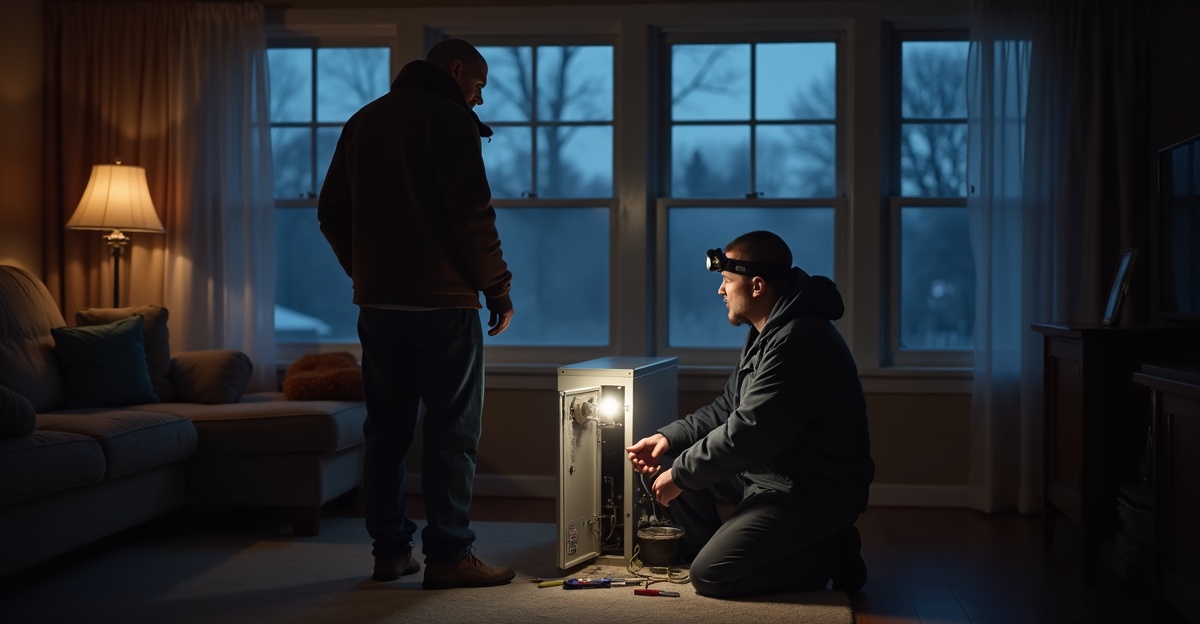
When our heat or AC fails during extreme weather, we need clear expectations and fast action. Understanding the emergency hvac service process helps us move quickly and stay safe. We handle every call with urgency. Our team dispatches a skilled technician, diagnoses the issue, reviews clear pricing, and restores comfort without surprises.
Key Takeaways
- Call immediately for no heat in winter, no cooling during extreme heat, burning smells, loud metal noises, electrical issues, or a system that will not turn on.
- A live team member gathers key details about the system and the symptoms so we can dispatch quickly with the right tools and common parts.
- While waiting, we clear access to equipment, secure pets, and safely check the thermostat and breakers to speed up diagnosis.
- The technician starts with safety checks, then completes a step-by-step evaluation and explains the issue in plain language.
- We provide clear, written pricing before repairs begin, then test the system and confirm that everything operates safely and correctly.
Signs You’re Facing a True HVAC Emergency
Heating failure in a Massachusetts or Southern New Hampshire winter is serious. Freezing indoor temperatures can lead to burst pipes and serious cold-related health risks according to the CDC’s winter weather safety guidance. In that situation, emergency heating repair isn’t optional. It’s urgent.
Air conditioning problems can also become emergencies. During extreme summer heat waves on the North Shore or in the Merrimack Valley, high humidity and indoor temperatures can quickly create dangerous heat-related health risks as outlined by the National Weather Service. An immediate emergency AC repair may be the safest option.
Other warning signs mean it’s time to stop and call for help:
- Burning smells or signs of electrical issues
- Loud banging, grinding, or metal-on-metal noises
- No airflow from vents
- The system won’t turn on at all
- A thermostat that’s blank or unresponsive
If there’s a burning odor, visible smoke, or a suspected gas smell, shut the system off immediately and wait for a technician. Safety comes first. Don’t keep resetting breakers or restarting equipment if something feels wrong, as the National Fire Protection Association warns against repeated breaker resets during electrical faults.
For guidance on what qualifies, we break it down clearly in our article on what is considered an HVAC emergency. If there’s uncertainty, we recommend calling. A quick conversation can help determine whether it’s a true emergency or something that can wait for standard HVAC service Massachusetts homeowners schedule during business hours.
We handle Southern New Hampshire HVAC repair and surrounding Massachusetts communities every day. When in doubt, it’s always better to check. We’ll give a straight answer right away.
What Happens When You Call for 24/7 HVAC Repair
The emergency HVAC service process starts with a real person answering the phone. We don’t hide behind automated systems when heat or cooling is down. We gather details quickly and calmly so we can move fast.
During the call, we typically ask:
- Service location, including Methuen, the North Shore, Merrimack Valley, or New Hampshire
- Type of system: furnace, boiler, central AC, or heat pump
- Symptoms you’re noticing
- When the issue started
That information helps us prepare the right tools and parts before we arrive. It also allows us to prioritize calls, especially during severe weather.
After-hours situations are common. We outline the differences clearly in our guide to after-hours HVAC service, so expectations are clear from the start.
Response times depend on demand, weather, and call volume. We’re direct about what we can do without overpromising. For more on timing, see our explanation of how fast HVAC repairs can be done.
If a system is down right now, call for immediate emergency HVAC service so we can dispatch a technician. Once the call is scheduled, help is already in motion.
Dispatch, Travel Time, and How to Prepare While You Wait
Weather plays a big role in HVAC repair response time. Snowstorms, freezing rain, and heat waves increase service demand. Time of day matters as well. Nights and weekends often bring higher after-hours HVAC repair volume. Current call load also affects dispatch order.
We focus on speed and organization without making unrealistic promises. Our 24/7 HVAC repair team works with clear priorities: safety and urgent loss of heat or cooling come first.
While waiting, a few simple steps help the HVAC emergency call process move smoothly:
- Clear a path to the furnace, boiler, or air handler
- Move items away from the outdoor AC unit
- Secure pets for everyone’s safety
- Check thermostat settings and the breaker panel only if it’s safe
Preparation makes diagnosis faster. If preparation questions come up, we explain more in our guide on how to prepare for an HVAC emergency.
When we arrive, we show identification and treat your home with respect. Floors are protected. Work areas stay organized. Professionalism matters, especially during stressful moments.
Technician Arrival and Step-by-Step System Diagnosis
The visit begins with a clear introduction and a quick review of the problem described during the call. We confirm symptoms and ask if anything has changed.
Safety checks come first. That can include checking for gas smells, verifying carbon monoxide safety precautions recommended by the CDC, and inspecting electrical components. Safety is never rushed.
Next comes a focused system evaluation. Typical steps include:
- Confirming the power supply
- Inspecting and replacing clogged filters if needed
- Checking ignition components on furnaces or boilers
- Measuring refrigerant levels in air conditioning systems
- Evaluating airflow and duct performance
We keep explanations simple. Technical terms don’t help in an emergency. We describe what failed, why it likely happened, and what options exist to fix it. If the root cause appears sudden, we often reference what commonly leads to shutdowns in our article on what causes an HVAC system to stop working suddenly.
Our licensed, trained technicians understand New England winters and humid summers. Systems here work hard year-round. That experience helps us diagnose accurately and efficiently.
Before any repair begins, we explain the situation clearly. Nobody moves forward without understanding exactly what’s wrong.
Clear Pricing, Approval, and Repair Options
An honest HVAC service pricing explanation comes before tools come out. We present estimates in writing or digitally. Labor, parts, and any after-hours considerations are outlined clearly.
Costs depend on several factors:
- Type and age of the system
- Availability of replacement parts
- Time of service, including after-hours HVAC repair
- Severity of the issue
We answer pricing concerns directly. For more detail, we explain in plain terms in our post on emergency HVAC service costs.
The approval process is straightforward. We review the estimate. Questions get answered. Once approved, work begins.
Possible outcomes are discussed upfront. Sometimes we complete the repair immediately. Other times we provide a temporary solution to restore heat or cooling while waiting on a special-order part. If a component isn’t available, we explain the expected HVAC repair response time and scheduling plan.
There are no hidden fees. There are no surprise add-ons. We make the cost clear before the repair starts.
After the Repair: Testing, Documentation, and Next Steps
Repair work isn’t finished until the system is fully tested. We run the equipment through proper cycles to confirm safe and stable operation. Thermostats are calibrated. Airflow gets checked again.
Old parts are removed. Work areas are cleaned. The space is left as it was found.
Documentation is provided for the repair. If warranties apply to parts or labor, we explain coverage clearly. For larger concerns or aging systems, we may review long-term options available through our HVAC general services, heating services, or cooling services as appropriate.
If a system can’t be restored immediately, a realistic timeline is provided. Temporary comfort solutions are discussed whenever possible, especially during extreme weather.
The process is consistent and clear:
Emergency HVAC Call Timeline at a Glance
Call → Dispatch → Diagnosis → Approval → Repair → Testing
Every step is explained along the way. If emergency HVAC service is needed in Methuen, MA, the North Shore, Merrimack Valley, or for Southern New Hampshire HVAC repair, call now for fast, transparent help. We’re ready to respond.
Frequently Asked Questions
The emergency HVAC service process typically takes one to several hours, depending on the issue. Simple fixes like replacing a capacitor or thermostat can be completed quickly, while complex problems such as motor or control board failures may require additional time. Diagnosis is completed first, followed by clear pricing and repair approval before work begins.
Yes, emergency HVAC service often costs more than standard appointments. After-hours calls, weekends, holidays, and severe weather demand can increase labor rates. Pricing also depends on the type of system and replacement parts needed. Reputable companies provide written estimates upfront so you understand the total cost before repairs start.
You can perform basic safety checks before requesting emergency HVAC service. Confirm the thermostat has power, check circuit breakers, and inspect air filters for heavy buildup. However, avoid resetting breakers repeatedly or opening equipment panels. If you notice burning smells, gas odors, or loud mechanical noises, shut the system off and call immediately.
A true HVAC emergency involves immediate safety risks or extreme indoor temperatures. No heat during freezing weather, no air conditioning during severe heat waves, electrical burning smells, gas odors, or a system that will not start are urgent situations. Minor issues like uneven airflow or routine maintenance typically do not require emergency response.
Most emergency HVAC repairs restore full operation the same day if parts are available. Technicians aim to address the root cause, not just temporary symptoms. However, older systems or rare components may require special-order parts. In those cases, a temporary solution may be installed to provide heating or cooling until permanent repairs are completed.